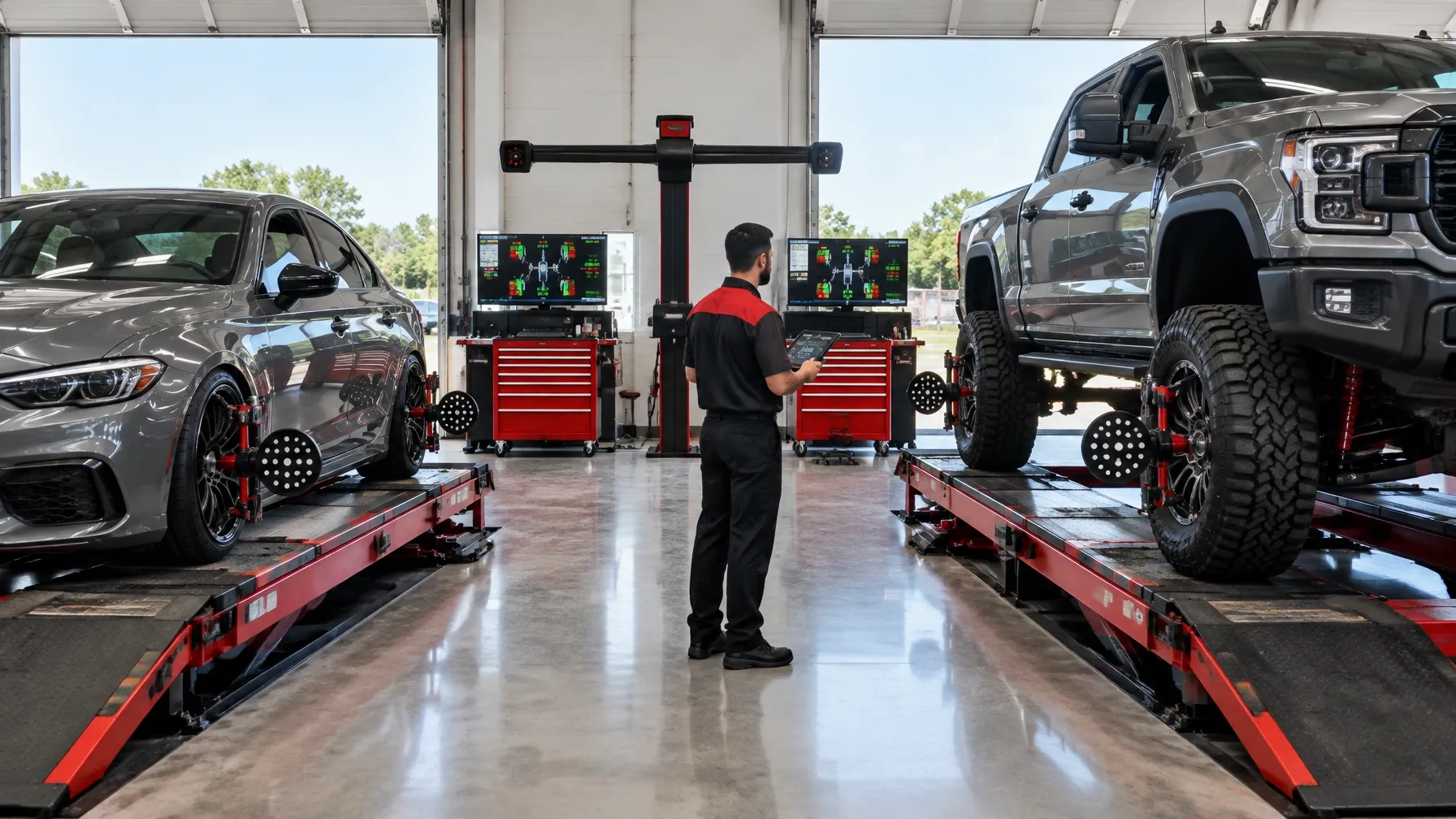
Truck · Lowered · Modified · Air suspension
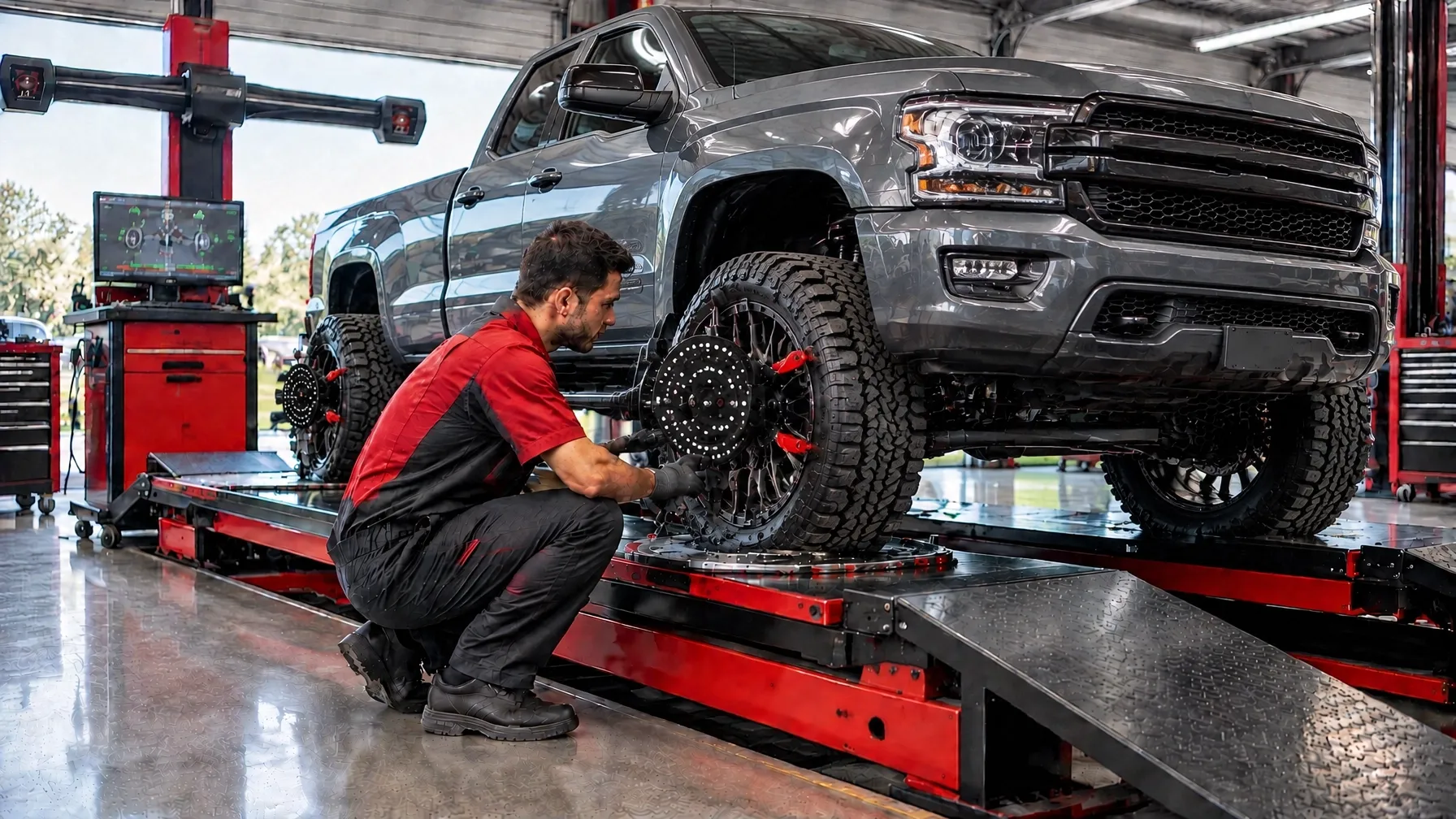
Truck & Lifted Truck Alignment in Killeen, TX
Lifted trucks, lowered springs, coilovers, and air suspension change the geometry an alignment depends on. We inspect the suspension, measure the angles, and explain what the setup can and cannot achieve before any adjustment. Drivers come to us from Killeen, Fort Cavazos, Harker Heights, Copperas Cove, Belton, and Temple.
Why these vehicles are different
Built lower. Measured the same way.
Every alignment depends on the suspension underneath it. When a car is lowered with drop springs, coilovers, or an air system, control arm angles change, tie rods move, and the adjustment range built for the stock ride height may shrink. That is why a modified vehicle deserves an inspection before the alignment head starts turning.
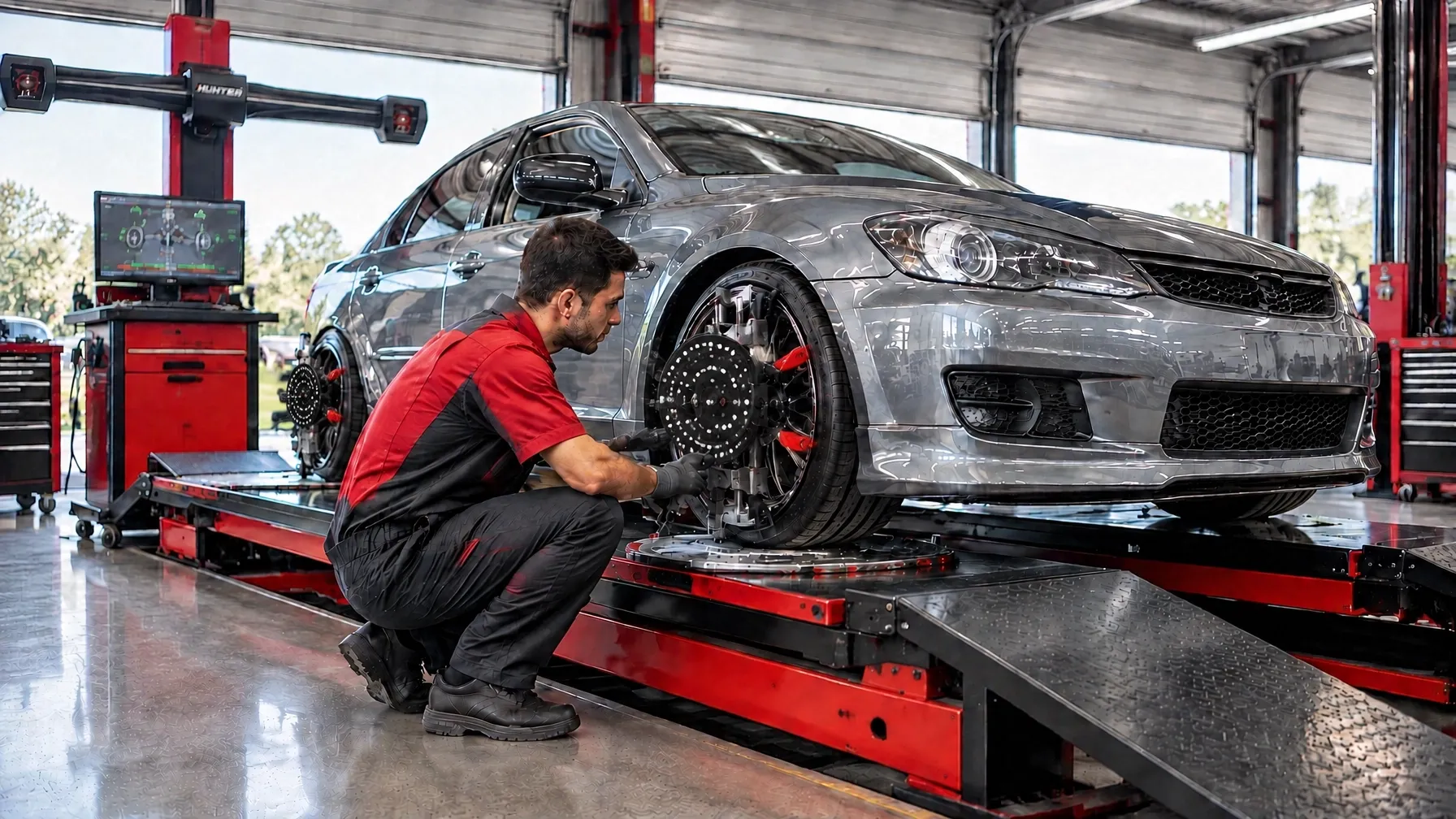
Ride height matters as much as the angles. If the vehicle sits too low for safe suspension travel, or if a component is worn or damaged, the alignment may not hold or may not be safe to set. We would rather show you that on the lift than guess at the numbers.
On our Hunter HawkEye Elite alignment equipment, the targets mount to the wheels photographically, which suits lowered vehicles that have little clearance for swing-out style heads. The readings still come from the same geometry measurements used on stock vehicles.
Signs to bring it in
What a modified setup feels like when it is off.
- +The car pulls to one side or needs constant steering correction.
- +Tires wear unevenly, chunk, or cup after the suspension was changed.
- +The steering wheel sits off-center even when driving straight.
- +New clunks, thuds, or binding appear over bumps or while turning.
- +The car bottoms out, rides harsh, or sits unevenly corner to corner.
- +An air system loses height overnight or will not hold a set height.
What we inspect
The suspension first. Then the angles.
- +Ride height at each corner compared with the suspension's working range.
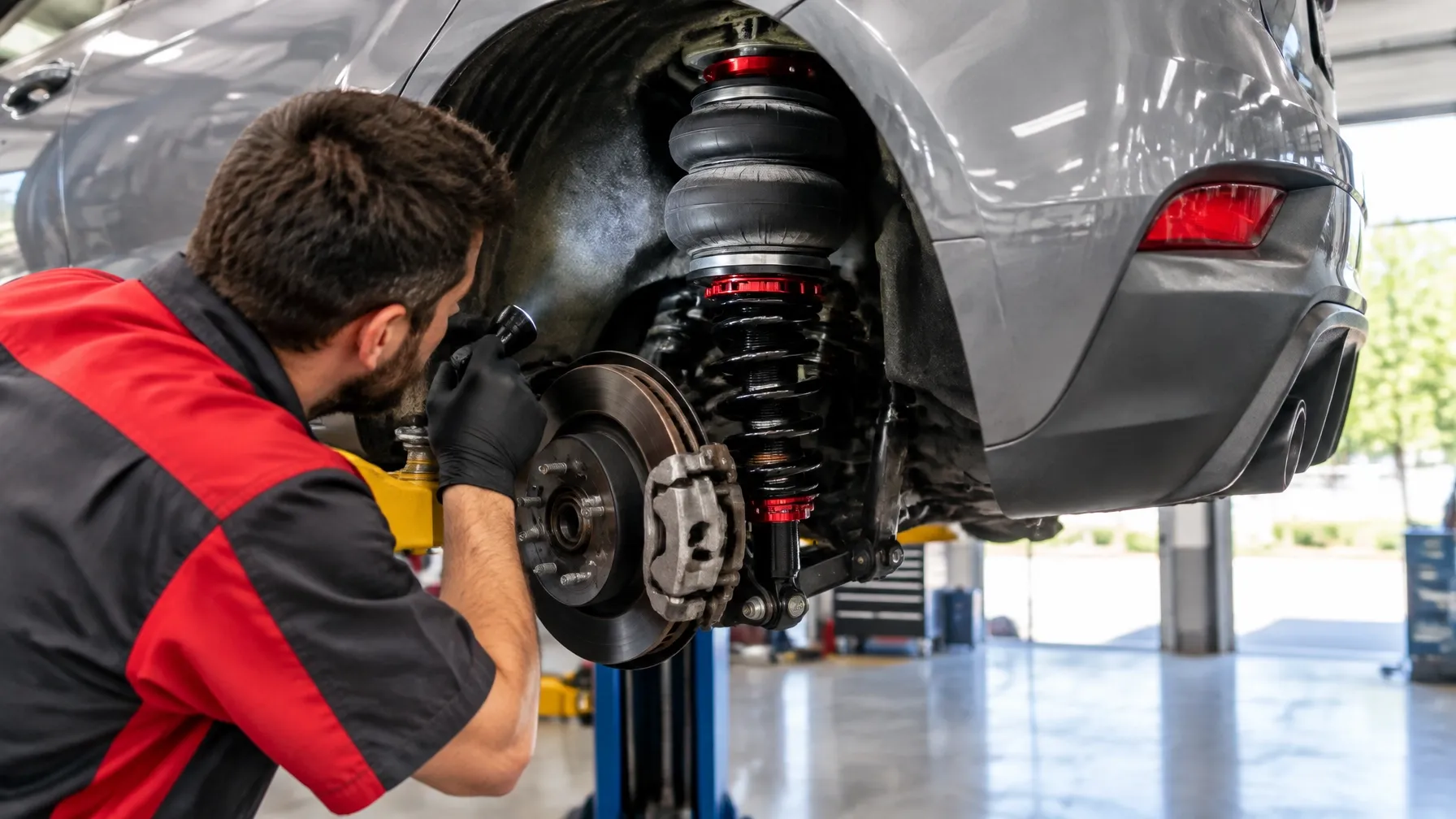
- +Springs, coilovers, or air struts, lines and fittings for leaks or damage.
- +Control arms, ball joints, bushings, and tie rods for wear or binding.
- +Tire condition and wear pattern from the current setup.
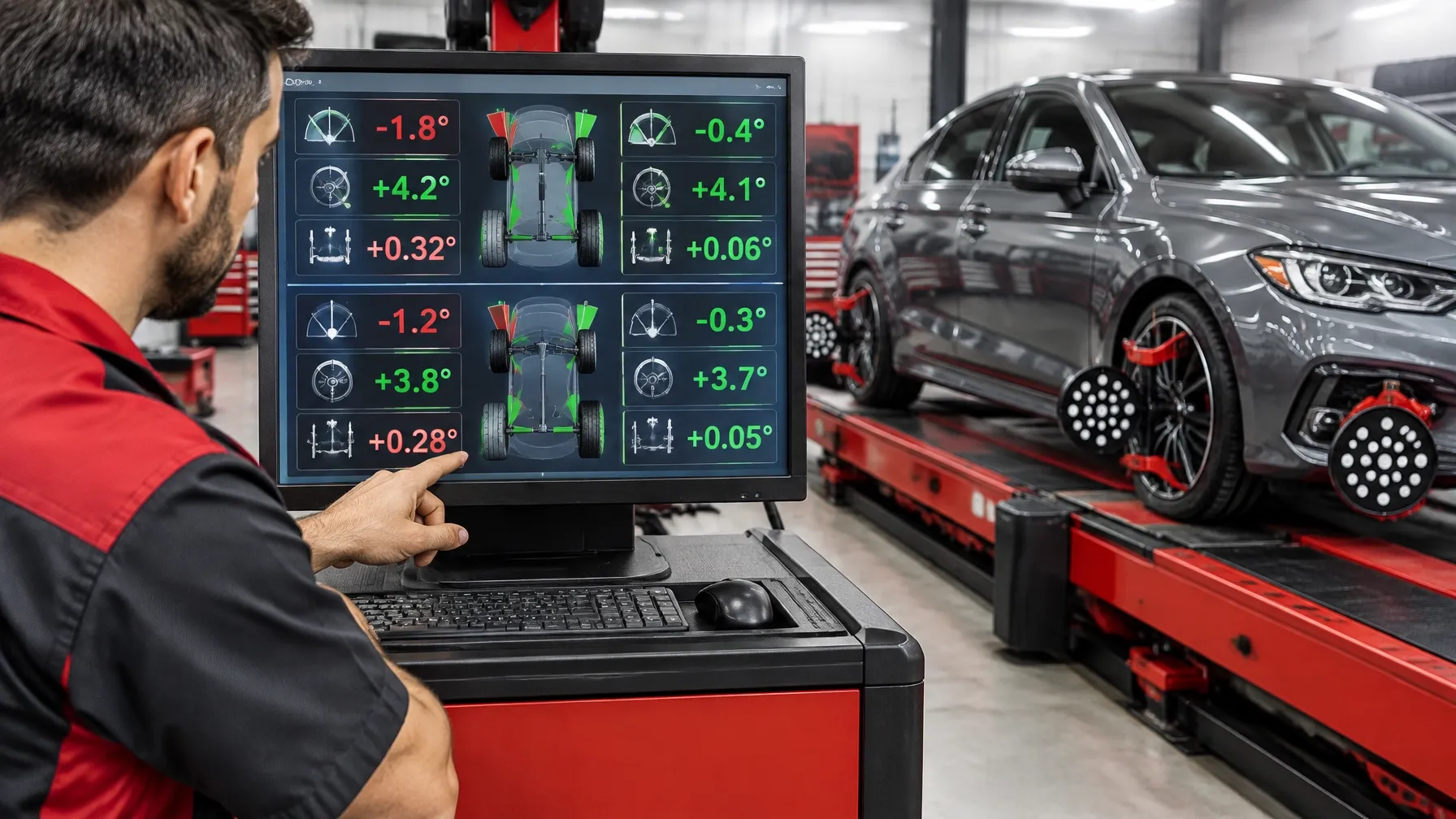
- +Camber, caster, and toe measurements on computerized equipment.
- +What can be adjusted within safe limits, and what cannot.
Our process
Straight answers for modified cars.
1. Talk through the setup. Tell us what the car has: drop springs, coilovers, air management, camber kit, and how it drives. The details guide the inspection.
2. Inspect on the lift. We check ride height, travel, and the condition of the steering and suspension parts before touching a single adjustment.
3. Measure and explain. On the alignment equipment we record the angles, show you the readings, and explain what is within reach for your setup.
4. Adjust what can be safely adjusted. If a worn or binding part limits the result, we show you the finding and quote the repair before any work begins.
This is the same transparent process we use on every vehicle: findings explained first, top-brand parts, pricing that beats dealer rates, and same-day service in most cases.
Modified alignment questions
What should you know?
Can you align a lifted truck or car with air suspension?
In many cases, yes. The system needs to hold a consistent ride height for the measurements to be accurate. We test that the car sits at a stable height, inspect the suspension, and go from there.
Will lowering my car wear tires faster even with an alignment?
It can. Lowering changes camber and can push tire wear to the inner edge even when toe is correct. We set the angles to the best available range for your setup and show you what to watch for.
Do I need a camber kit for a lowered car?
It depends on how far the car is lowered and what the measurements show. Some setups come within range with factory adjustments; others benefit from adjustable parts. We measure first, then explain the options.
How low is too low for an alignment?
When ride height leaves too little suspension travel, the geometry cannot be set safely and the tires or components wear quickly. If we reach that point, we will show you why rather than guess at the numbers.
Can you align lifted trucks the same way?
Lifted vehicles get the same careful inspection, and the geometry goals differ from a lowered street car. Bring the lift details with you and we will measure what the setup can achieve. Ask us about it when you book your appointment.
Find us in Killeen
Ready for a straighter drive?
We are at 2502 W Stan Schlueter Loop, Killeen, TX 76549. Hours are Mon-Fri 7:30 AM-6:00 PM, Sat 7:30 AM-3:00 PM, and closed Sunday.